Research

Computational and experimental work in thermal-fluid systems and renewable energy.

Flow-Channel Optimization for Heat & Mass Transfer

Adjoint-based topology optimization of flow-channel geometries for battery cold-plate thermal management — up to 15.7% pressure-drop reduction via corner-curvature optimization, using OpenFOAM.

Click to view details →
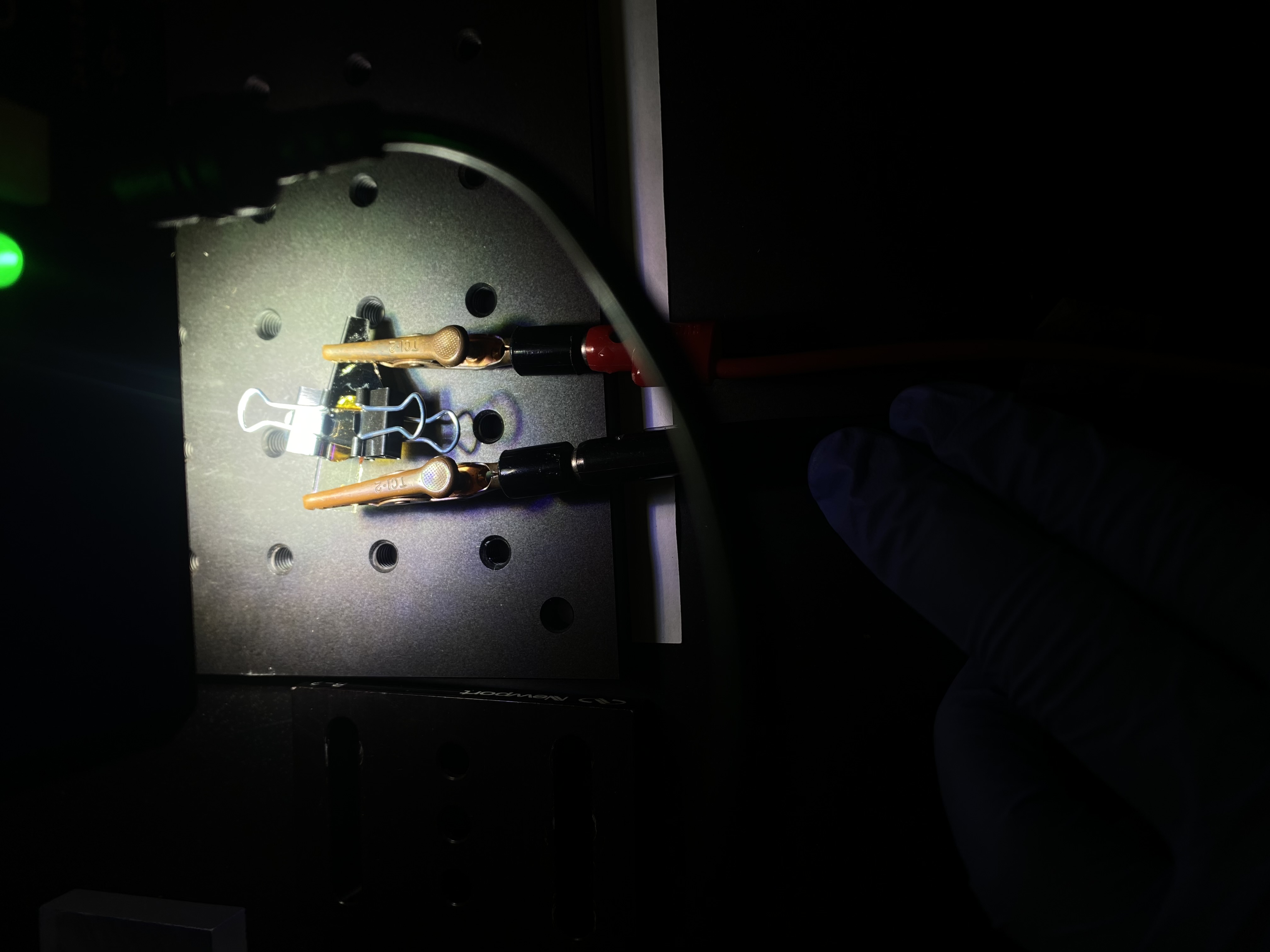
Dye-Sensitized Solar Cell Research

Dye-Sensitized Solar Cells from Natural Dyes

Fabricated and tested 30 lab-scale DSSCs using beetroot- and sumac-derived natural dyes; the best-performing cell reached 0.099% efficiency and a 55.2% fill factor.

Click to view details →

Flow-Channel Optimization for Heat & Mass Transfer

SURGE Program, Undergraduate Researcher Ā· May 2026 – Present Ā· PI: Dr. Xianglin Li Ā· Washington University in St. Louis

Overview

This project applies CFD and topology optimization to flow-channel geometries for battery cold-plate thermal management, targeting reduced pressure drop while maintaining flow uniformity — work that sits at the intersection of thermal-fluid systems, numerical methods, and computational mechanics.

Method

  • Developed OpenFOAM workflows spanning mesh generation (blockMesh, snappyHexMesh), solver configuration, turbulence modeling, and ParaView post-processing.
  • Implemented adjoint-based topology optimization, achieving 70+ stable design iterations; now extending the method to handle more complex design problems.

Results

  • Quantified up to 15.7% pressure-drop reduction via corner-curvature (fillet) optimization of sharp channel turns; curvature proved beneficial above Re ā‰ˆ 3000.
  • Validated baseline CFD methodology against Ghia et al.'s (1982) lid-driven cavity benchmark.
  • Executed OpenFOAM simulations with over 72,000 computational cells across 60 CPU cores using shell-scripted workflows.

Status

Active, ongoing research — extending the adjoint-based method to more complex design problems.
Dye-Sensitized Solar Cells Using Natural-Dye Sensitizers

Research Assistant, Department of Physics Ā· Feb 2024 – Aug 2025 Ā· PI: Dr. Rasanjali Jayathissa Ā· Truman State University

Overview

Investigated beetroot- and sumac-derived natural dyes as sustainable alternatives to conventional metal-complex sensitizers in dye-sensitized solar cells (DSSCs) — a lower-cost, more sustainable path to solar energy conversion than traditional silicon panels or synthetic sensitizers.

Method

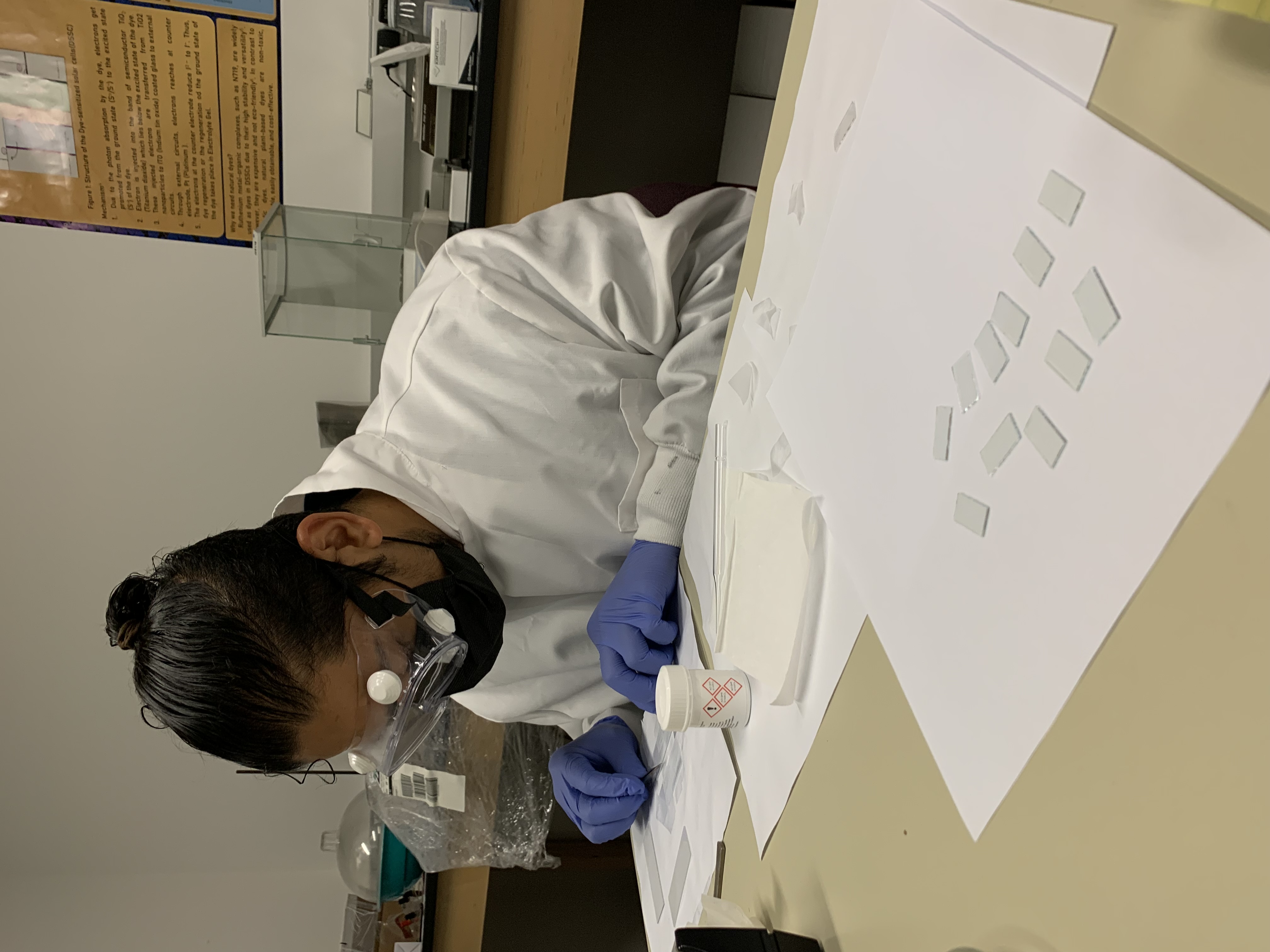
  • Designed experiments for natural-dye extraction and characterization using UV-Vis, Fourier Transform Infrared (FTIR), and Electrochemical Impedance (EIS) spectroscopy.
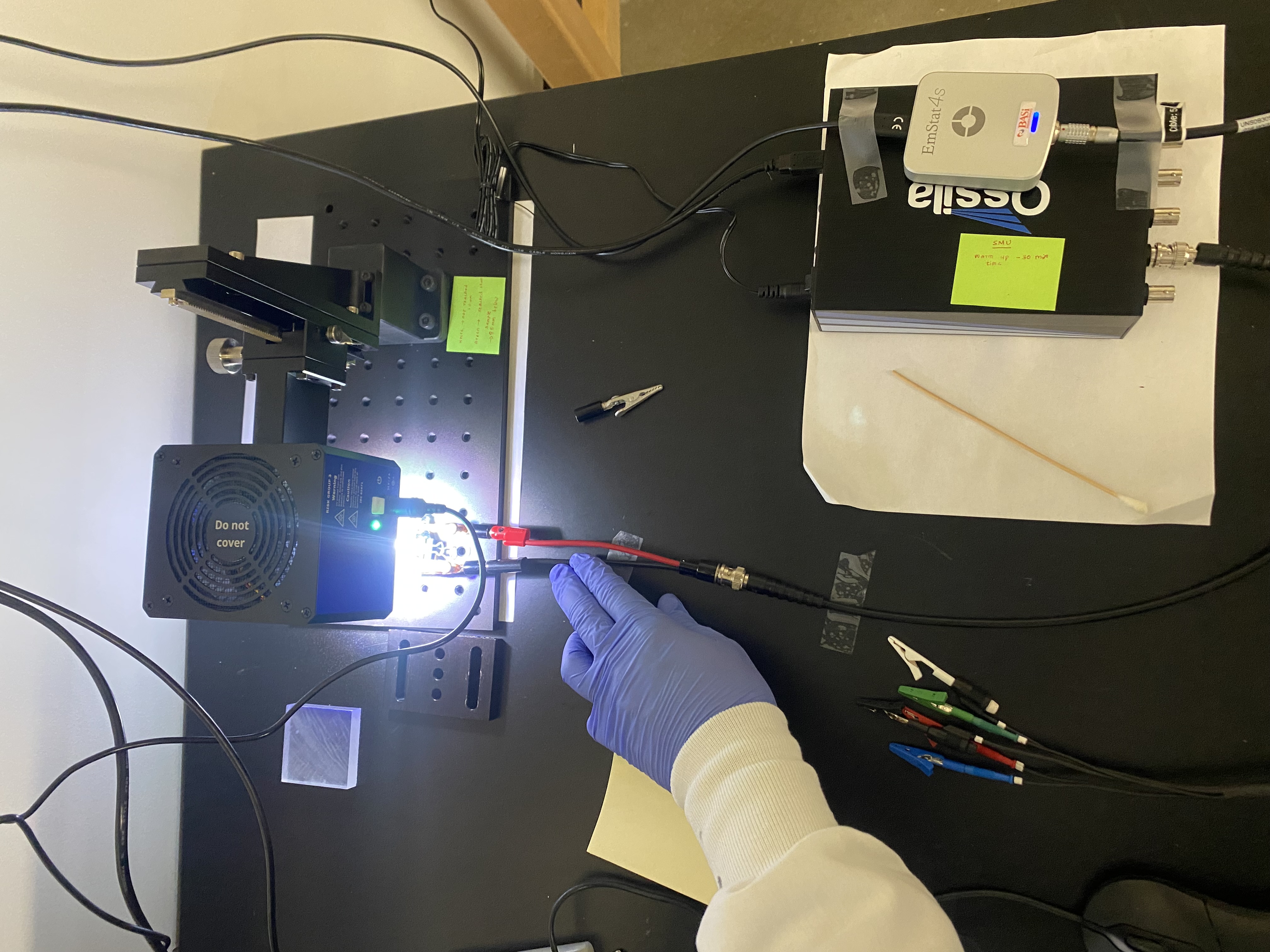
  • Fabricated and tested 30 laboratory-scale DSSCs using solar-simulator I–V measurements.

Findings

  • The best-performing sumac-based cell achieved 0.099% efficiency and a 55.2% fill factor.
  • Linked higher photocurrent in sumac-based cells to stronger light absorption, and higher open-circuit voltage in beetroot-based cells to lower recombination.
  • Presented findings at the 2025 APS Prairie Section Meeting (Feb. 21, 2025).

Acknowledgment

I gratefully acknowledge the mentorship and guidance of Dr. Rasanjali Jayathissa during this research, conducted at Truman State University.